Berlin Digital Nomad Social Map: Find Real Connection Beyond Work

Berlin is easy to work from and strangely hard to belong to. You can find a coworking desk in Kreuzberg, a flat white in Prenzlauer Berg, a techno night in Friedrichshain, and a Slack community for almost every niche. But if your week is mostly laptop, gym, delivery food, and short conversations at events, the city can still feel distant. This Berlin digital nomad social map is for the remote worker, freelancer, expat, founder, designer, writer, or creative who wants something more stable than networking and more human than another swipe.

The goal is not to become hyper-social. It is to create enough repeated, offline contact that friendship has room to grow. Digital nomad friendships rarely happen because you attended one event. They happen when you choose the right rooms, show up more than once, and make it easy for people to see you as part of their real life. Berlin gives you many doors. The skill is knowing which doors lead to conversation, which lead to performance, and which lead to small group gatherings where people can actually remember your name.
Why Berlin feels social but not always connected
Berlin has a high social surface area. There are meetups, openings, language exchanges, yoga classes, startup events, club nights, board game sessions, gallery walks, and coworking breakfasts. For a newcomer, that looks like abundance. The problem is that abundance can create churn. You meet five people on Thursday, ten people on Saturday, and by Monday you are not sure who you would text for coffee. A full calendar is not the same as a social life.
Digital nomads face a specific version of this. Work is portable, but emotional continuity is not. When your professional life is distributed across time zones, your social life can become fragmented too. You may have clients in New York, teammates in London, friends in Amsterdam, and a lease in Berlin. That can feel exciting in your twenties and early thirties, but it also means your day may not naturally include the repeated micro-moments that make adult friendships easier: seeing the same people at lunch, walking home with someone after class, or running into a familiar face at a neighborhood cafe.
Berlin also has a strong culture of personal space. People are often friendly, but not always instantly available. Plans may be casual. Friend groups may already be established. Some locals protect their weekends. Many internationals are only in town for a few months. None of this means Berlin is cold. It means the city rewards intentionality. If you want real connection beyond work, you need a social system that does not depend on luck.

A useful social map separates places by what they are good for. Coworking spaces are good for professional familiarity. Cafes are good for low-pressure routine. Classes are good for repeated contact. Brunch is good for conversation. Nightlife is good for energy and shared memories, but not always for depth. Volunteer projects create trust through action. Small dinners create stronger bonds than large mixers. Once you stop expecting every setting to do every job, Berlin becomes easier to navigate.
The Berlin social map: where digital nomads actually meet people
Think of Berlin as several overlapping social layers. You do not need to master all of them. Pick two or three that match your personality, budget, schedule, and energy level. A good mix for many remote workers is one work-adjacent space, one interest-based activity, and one conversation-first gathering each week. This gives you variety without turning your life into a networking sprint.
1. Coworking spaces: good for familiarity, not instant friendship
Coworking spaces in Berlin can be useful if you treat them as long-term social infrastructure, not as a one-day productivity hack. The people you see repeatedly at the coffee machine or community lunch are more likely to become familiar than people you meet at a random event. Choose a space with community programming, not only desks. Look for weekly breakfasts, member lunches, founder circles, creative salons, or after-work drinks where the same people return.
Action step: commit to the same coworking space on the same two days each week for one month. Sit in a similar area. Say hello to the same people. Ask simple, non-invasive questions: “How long have you been working from here?” “Are you based in Berlin full-time?” “Do you have a favorite lunch spot nearby?” The aim is not to pitch yourself. It is to become socially recognizable.
2. Cafes and third places: build routine before conversation
Berlin’s coffee culture is one of its best tools for offline socializing. A cafe will not automatically give you friends, but it can give you a rhythm. If you work from the same cafe every Friday morning, join a reading hour, or become a regular at a neighborhood spot, you create light familiarity with staff and other regulars. Over time, this can turn into casual conversation. It is slow, but it feels natural.
Action step: choose one cafe for focused work and one cafe for social openness. At the social cafe, do not wear noise-canceling headphones the whole time. Bring a book, sketchbook, or notebook. Sit at a communal table if available. Be open to short interactions, but do not force them. Third places work best when they feel repeatable and low stakes.

3. Classes and hobby groups: the fastest path to repeated contact
If you want adult friendships, repeated contact is your friend. Language classes, ceramics, improv, climbing, dance, photography walks, cooking classes, and writing groups all create a reason to see the same people again. The activity removes pressure because the conversation does not have to carry the whole interaction. You have something to do together.
Action step: avoid one-off classes unless they are part of a series. A six-week course is more valuable socially than six unrelated events. Choose something you would attend even if you made zero friends. That way, your social life is not dependent on immediate results. After the second or third session, suggest a simple follow-up: “I’m grabbing coffee nearby after class if anyone wants to join.”
4. Brunch and small group gatherings: best for real conversation
For digital nomads, brunch has a practical advantage: it happens before everyone is tired, drunk, or rushing to another plan. It is structured enough to show up alone, but relaxed enough for real conversation. A table of five or six people is often the sweet spot. Large events create options, but small group gatherings create memory. People remember what you do, where you moved from, what you are building, and what kind of weekend you want.
This is the space that The Weekend Club is designed for: curated offline brunches that help expats, freelancers, nomads, and creatives meet a small group of new people without turning the experience into dating-app theater or business-card networking. The point is not to “optimize” friendship. It is to remove the hardest part: finding a room where people are open, available, and there for the same reason.
5. Nightlife, events, and culture: great for sparks, weaker for continuity
Berlin’s nightlife and cultural calendar are part of the city’s identity. Club nights, gallery openings, Christmas markets, Pride events, film screenings, and outdoor summer gatherings can create memorable moments fast. They are especially useful when you already have one or two people to go with. But they are not always the best place to start from zero. Music is loud. Groups are fluid. The point of the event may not be conversation.
Action step: use cultural events as follow-up plans, not only first meetings. If you meet someone at brunch, a coworking lunch, or a class, suggest a low-pressure next step: “There’s a photography exhibition this weekend. Want to check it out for an hour?” Shared context makes the second meeting easier.
How to choose the right social format for your energy level
Not every social format fits every person. If you are introverted, neurodivergent, newly arrived, burned out from remote work, or simply tired of shallow events, you need to choose rooms that protect your energy. The best social life is not the busiest one. It is the one you can sustain.
Large networking events are useful when you want speed, industry access, or weak ties. They are less useful when you want emotional safety. Dating apps can work for romance, but many people use them when what they actually need is community. Group chats can create awareness, but they often become noisy and passive. One-on-one meetups can be deep, but they require more trust and planning. Small group gatherings sit in the middle: enough people for momentum, few enough for presence.
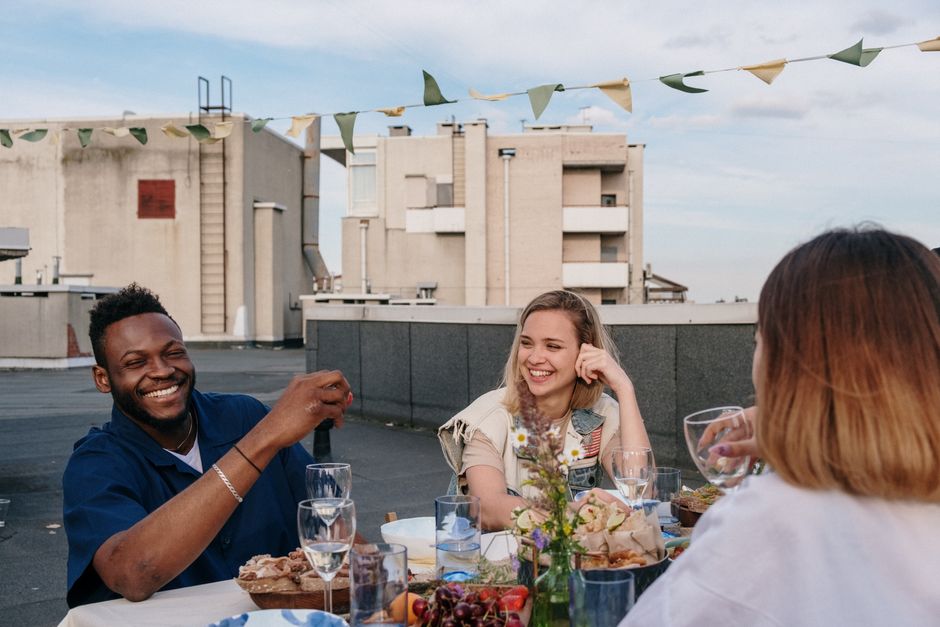
A simple rule: choose large events for discovery, recurring activities for familiarity, and small meals for connection. If you only do discovery, you will keep starting over. If you only do recurring activities, you may know people’s faces but not their stories. If you only do intense one-on-one meetings, you may burn out. A balanced social map gives you multiple ways to become known.
A weekly template for Berlin nomads
- Monday or Tuesday: work from the same coworking space and attend one community lunch or coffee break.
- Wednesday: join a recurring class, sport, or creative group that runs for several weeks.
- Friday: keep the evening flexible for a cultural event, casual drink, or rest.
- Saturday or Sunday: attend a small brunch, supper club, walking group, or curated offline gathering.
- After any good conversation: send a short follow-up within 24 hours and suggest one specific plan.
This template works because it uses repetition and variety. It gives you professional familiarity, interest-based contact, and conversation-first time. It also leaves space for recovery. Digital nomad friendships need consistency, but they do not need constant availability.
Conversation tactics that make Berlin feel less anonymous
Many people think friendship starts with being interesting. In practice, it often starts with being easy to talk to. You do not need a perfect story, a dramatic origin, or a founder-level elevator pitch. You need questions that move beyond resume facts without becoming too intense too soon.
Replace “What do you do?” with questions that reveal lifestyle and values. Try: “What brought you to Berlin right now?” “What has surprised you about living here?” “What does a good weekend look like for you?” “Are you trying to build more work focus or more community this season?” “What is one place in the city you keep returning to?” These questions work because they let people answer lightly or deeply.
When someone shares, listen for future hooks. If they mention they miss Thanksgiving with friends, love Super Bowl snacks more than football, want to visit Christmas markets, or are looking for a good climbing gym, you have a natural follow-up. Friendship grows when people feel remembered. The next time you message, reference the detail: “You mentioned wanting to find a good Christmas market. I’m going Saturday afternoon if you want to join.”
Also learn to exit well. Not every conversation needs to become a friendship. A clean ending keeps the room comfortable: “It was really nice talking with you. I’m going to grab another coffee, but I hope we cross paths again.” This is especially useful in Berlin, where people often appreciate directness and space.
The 24-hour follow-up rule
If you meet someone you genuinely liked, follow up within 24 hours. Keep it short and specific. “Great meeting you at brunch today. I liked our conversation about remote work routines. Want to grab coffee next Thursday or check out that gallery opening on Saturday?” Specific beats vague. A real invitation beats “let’s hang sometime.”
If they do not reply, do not over-read it. People travel, work across time zones, date, move, burn out, or lose track of messages. Send one friendly follow-up later if there was a strong connection. Then let it go. A healthy social map has enough doors that one closed door does not define your week.
From first meeting to real friendship: the three-repeat model
The biggest mistake digital nomads make is expecting chemistry to do all the work. Chemistry starts the process. Repetition builds the relationship. A practical model is three repeats: first meeting, second context, third shared ritual.
- First meeting: You meet at brunch, a class, a coworking lunch, or a small event. The goal is comfort and curiosity.
- Second context: You meet again in a different but simple setting: coffee, a market walk, a gallery, a casual dinner, or a park hangout.
- Third shared ritual: You create something repeatable: monthly brunch, Sunday walks, weekly climbing, co-working Fridays, or a rotating dinner group.
Real friendship usually appears around the third repeat because that is when you stop being “someone I met” and start becoming “someone in my life.” This is why small group gatherings are powerful. If five people meet over brunch and two or three return for another plan, the group can develop its own rhythm. You are not carrying the entire friendship alone.

For nomads, rituals should be portable and simple. Do not design a friendship around complicated logistics. Choose easy formats: same cafe, same time, same neighborhood, short duration. Ninety minutes is often enough. A recurring Sunday brunch or Saturday coffee walk can become an anchor, especially in a city where many people are juggling remote work, travel, and shifting plans.
Use groups to reduce pressure. If you meet one person you like, invite them to join a small table rather than asking for an intense one-on-one immediately. “A few of us are doing brunch this Sunday. Want to come?” feels lighter and often works better for adult friendships. It also helps people who are new to Berlin feel included without feeling evaluated.
FAQ: Making friends as a digital nomad in Berlin
Is Berlin a good city for digital nomad friendships?
Yes, but it rewards consistency. Berlin has strong infrastructure for remote work, creative communities, nightlife, cafes, and international meetups. The challenge is not a lack of people. The challenge is turning first meetings into repeated contact. Choose recurring spaces and small group gatherings instead of relying only on large events.
What is the best way to meet people offline if I work remotely?
Use a mix of coworking, recurring hobbies, and conversation-first meals. Coworking gives you daytime familiarity. Classes and sports create repeat contact. Brunch or dinner groups create space for actual conversation. If you only work from home and attend occasional large events, you will likely meet many people but build few relationships.
Are curated brunches better than dating apps for finding community?
They solve a different problem. Dating apps are designed around attraction and individual matching. Curated brunches are designed around group conversation, shared context, and offline socializing. If you want friends, community, and a low-pressure way to meet people beyond work, a small brunch table can feel more natural than swiping.
Your next step: build a social map, not a social panic
If Berlin feels lonely, do not assume you are bad at socializing. You may simply be using the wrong formats. A remote worker needs more than Wi-Fi and flexibility. You need repeated rooms, recognizable faces, and plans that happen offline. Start small: one recurring work spot, one hobby with the same people, and one small group meal each weekend.
The most sustainable social strategy is not to chase everyone. It is to create conditions where the right people can reappear. That is the heart of a Berlin digital nomad social map: fewer random encounters, more repeatable connection. Whether you use coworking lunches, creative classes, neighborhood cafes, or curated brunches through The Weekend Club, the goal is the same. Meet people offline, keep the table small enough for real conversation, and give adult friendships time to become part of your life.