
Lisbon Remote Worker Friendship Guide: Build a Circle in a Slow-Living City

Lisbon looks easy from the outside: sunlight, tiled streets, ocean air, flat whites, late dinners, and coworking spaces full of people with laptops. But if you work remotely, the city can also feel strangely quiet. You can spend all day on Slack with a team in London, New York, Berlin, or Singapore, then close your laptop and realize you haven’t had a real local conversation since ordering coffee. This Lisbon remote worker friendship guide is for that exact gap: the space between being surrounded by people and actually having a circle.

Lisbon rewards patience. It is not a city where deep friendships happen because you collect 200 event contacts in a month. The better strategy is slower: choose repeat places, meet people offline, join small group gatherings, and create low-pressure rituals that make friendship feel natural. For expats, freelancers, creatives, and digital nomads, this matters more than another list of bars. You don’t need more anonymous networking. You need digital nomad friendships that survive beyond one good conversation.
Why Lisbon Feels Social But Can Still Be Lonely
Lisbon has a strong international scene. You’ll find founders working from cafes in Santos, designers near Príncipe Real, writers in Alfama, developers in coworking spaces around Cais do Sodré, and nomads taking calls from apartments in Graça. On paper, it should be easy to meet people. In practice, remote workers often face three problems: irregular schedules, shallow introductions, and constant turnover.
Irregular schedules mean your social life depends on time zones. A friend may finish work at 4 p.m. because their team is in Amsterdam. You may finish at 8 p.m. because your client is in New York. Another person may vanish for two weeks because they are flying to Madeira, Madrid, or Mexico City. When everyone has flexibility, planning can paradoxically get harder.
Shallow introductions are the second issue. Lisbon has many meetups, language exchanges, open coworking events, and founder drinks. They are useful, but they can become a loop: name, country, job, how long are you here, what do you think of Lisbon, follow on Instagram, repeat. That script is fine for first contact. It is not enough for adult friendships.

Turnover is the third challenge. Many people arrive with a three-month plan and extend it. Others leave exactly when you start getting close. This is why a strong social strategy in Lisbon should not depend on one person becoming your best friend immediately. It should help you build a wider, steadier web of people through offline socializing, repeat encounters, and small commitments.
The Slow-Living Social Strategy: Make Friendship Repeatable
In cities like New York or London, friendship can grow through speed: packed calendars, after-work drinks, big birthday dinners, and constant cultural events. Lisbon works differently. The city has energy, but its best social rhythm is slower. People linger over coffee. Brunch can stretch into a walk. A casual plan can become a sunset in Jardim do Torel or a late dinner in Bairro Alto. Use that pace instead of fighting it.
The key is repeatability. Friendship forms faster when people see you more than once in a similar context. A one-off meetup gives you a spark. A repeat ritual gives you continuity. For remote workers, the easiest repeat rituals are weekday coworking blocks, Saturday brunch, Sunday walks, gym classes, language practice, creative workshops, and neighborhood cafe routines.
Build around recurring places, not random events
Pick two or three places where you can become familiar. For example, choose one cafe for deep work, one brunch spot for meeting people, and one evening activity that doesn’t depend on alcohol. You don’t need to become a local celebrity. You just need enough repetition that faces become familiar and conversations can continue. In Lisbon, that might mean working from the same cafe every Tuesday, joining the same yoga class, or returning to the same monthly dinner group.
Remote workers often underestimate place-based familiarity. If you move around constantly, you stay anonymous. If you repeat a few good locations, you create social surface area. The barista remembers your order. A freelancer at the next table asks what you’re working on. Someone from last week’s brunch waves when you arrive. These tiny moments reduce the awkwardness of starting again.
Use brunch as a low-pressure friendship format
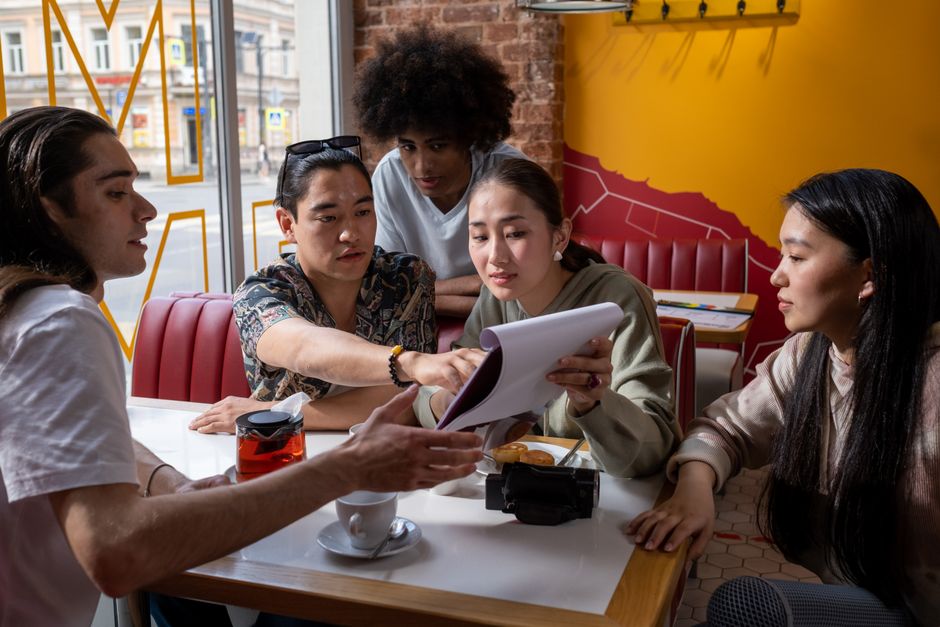
Brunch works well in Lisbon because it sits between effort and ease. It is more intentional than grabbing coffee, but less intense than dinner. It is daylight, conversation-friendly, and compatible with people who don’t want a heavy nightlife scene. For newcomers, introverts, and busy professionals, brunch also offers a clear time box. You can meet five new people, talk for 90 minutes, and still have the rest of your weekend.

This is where The Weekend Club fits naturally. Instead of swiping through profiles or entering a loud networking room, you join curated offline brunches designed around small group gatherings. The goal is simple: meet 5 new people every weekend, offline. For expats, nomads, freelancers, and creatives in Lisbon, that structure removes the hardest part: deciding who to invite, where to go, and how to make the first step feel normal.
Where Remote Workers Can Meet People in Lisbon
A good social life in Lisbon usually combines three layers: work-adjacent spaces, interest-based communities, and relaxed weekend gatherings. Each layer serves a different purpose. Work-adjacent spaces help you meet people with similar schedules. Interest-based communities give you shared context. Weekend gatherings turn introductions into actual friendship.
1. Coworking spaces and cafe work blocks
Coworking spaces are useful if you treat them as communities, not just desks. Don’t only arrive, wear headphones, take calls, and leave. Go to the community breakfast. Ask someone about their setup. Join the Slack channel if the space has one. Suggest a coffee after a morning work sprint. The best opening line is often practical: “Are you also trying to survive meetings with another time zone?”
Cafe work blocks can also become social if you are consistent and respectful. Lisbon has a strong cafe culture, but not every cafe wants laptop campers all day. Choose laptop-friendly places, buy enough, avoid peak lunch pressure, and don’t take loud calls in small rooms. If you see another remote worker regularly, a simple comment like “I think we have the same Tuesday office” can start a conversation without feeling forced.
2. Skill-based communities
Skill-based communities are easier than generic networking because the activity carries the conversation. Try Portuguese classes, ceramics, photography walks, writing groups, dance, climbing, surf lessons, cooking classes, or startup workshops. The goal is not to become amazing at the skill. The goal is to create repeated contact with people who also invest in offline life.
Creative communities work especially well for Lisbon because many residents are building independent careers. You may meet a UX designer who moved from Berlin, a photographer from Sydney, a product marketer from Amsterdam, or a founder who splits time between London and Lisbon. Shared projects and shared curiosity make conversation less transactional.
3. Small group dinners, brunches, and walking plans
Big events are good for discovery. Small groups are better for connection. In a room of 80 people, you may collect names. At a table of six, you can hear stories. This is why small group gatherings are powerful for remote workers: they create enough variety to be interesting, but enough intimacy for real conversation. A group of four to six is usually the sweet spot.

Walking plans are underrated in Lisbon. The hills give you movement, views, and natural pauses. A walk from Chiado to Príncipe Real, a sunset near Miradouro da Senhora do Monte, or a Sunday stroll by the river can make conversation easier than sitting face-to-face with pressure to perform. If brunch goes well, suggest a walk afterward. It is the simplest bridge from first meeting to second layer friendship.
How to Turn First Meetings Into Real Friendships
Meeting people is only the first step. The real challenge is follow-up. Many remote workers are good at introductions and bad at continuity. They attend events, enjoy the conversation, exchange Instagram handles, and then never meet again. If you want adult friendships, you need a follow-up system that feels human, not desperate.
Use the 24-hour follow-up rule
After a good conversation, send a short message within 24 hours. Keep it specific. For example: “Loved talking about remote work routines and Lisbon cafes today. Want to try that brunch place next Saturday?” Specific messages work because they prove you were present. Generic “great meeting you” messages are polite but easy to forget.
Don’t overcomplicate the second hangout. Suggest something simple, near, and time-limited: coffee before work, a weekend market walk, a one-hour co-work session, a casual brunch, or a gallery visit. If the person is new to Lisbon, offer a plan that helps them feel oriented. If they have been here longer, ask for one place they think is overrated and one place they still love.
Create micro-groups instead of one-on-one pressure
One-on-one friendship can feel intense after a first meeting. Micro-groups reduce pressure. If you meet two people you like at different events, invite both to brunch. If someone mentions they want to meet more creatives, connect them with another person who said the same. You become a social node, not just a social seeker.
This approach works especially well in transient cities. When one person travels, the whole social structure doesn’t collapse. You still have a group. You still have a ritual. Over time, the group becomes a soft landing for newcomers and a steady base for people who stay longer.
Balance international and local friendships
It is natural for expats and nomads to start with other international people. They share the same questions about visas, housing, healthcare, taxes, neighborhoods, and where to find a decent late breakfast. But if you only stay inside the expat bubble, Lisbon can feel like a backdrop instead of a home.
Learning basic Portuguese, respecting local pace, and joining local-interest activities will deepen your experience. You don’t need perfect language skills to show effort. A simple greeting, a patient attitude, and curiosity go a long way. Friendship in Lisbon grows better when you are not just consuming the city, but participating in it.
A Practical 30-Day Plan for Building a Circle in Lisbon
If you have just arrived, don’t wait until loneliness gets heavy. Use your first month to build momentum. The goal is not to find your best friends immediately. The goal is to create enough repeated contact that friendship has somewhere to grow.
- Week 1: Choose your anchors. Pick one coworking space or laptop-friendly cafe, one fitness or creative class, and one weekend social format. Put them in your calendar before your work week fills up.
- Week 2: Start conversations lightly. Ask practical questions: “How long have you been in Lisbon?” “Do you usually work from here?” “What’s your favorite neighborhood for coffee?” Avoid turning every chat into a career pitch.
- Week 3: Follow up with specific plans. Invite one or two people to a low-pressure activity. Brunch, a walk, or a co-work block is better than a vague “let’s hang sometime.”
- Week 4: Create a repeat ritual. Host or join something that can happen again: Saturday brunch, Sunday walk, Thursday cafe work sprint, monthly dinner, or a small group gathering through The Weekend Club.
Budget matters too. Lisbon is not as cheap as older digital nomad blogs promised, especially for housing, but social plans can still stay reasonable. A coffee may cost a few EUR, brunch may range widely depending on the place, and coworking day passes can add up. Mix paid and free activities. Pair brunch with a walk. Choose house dinners sometimes. Use parks, viewpoints, beaches, bookstores, and public events as part of your social map.
Seasonality also changes the social rhythm. Summer brings beach days, Pride events, outdoor music, and visiting friends passing through Europe. Autumn can be ideal for deeper routines because people return to work mode. December may include Christmas markets and holiday dinners, which are perfect for inviting people who are far from family. In February, even a casual Super Bowl watch plan can bring North Americans and curious non-Americans together. Around November, a Friendsgiving-style potluck can help international residents create warmth without assuming anyone shares the same traditions.
FAQ: Lisbon Friendships for Remote Workers
Is Lisbon a good city for digital nomad friendships?
Yes, but it works best if you prioritize consistency over volume. Lisbon has many remote workers, expats, freelancers, and creatives, so first meetings are not hard. The challenge is turning those meetings into repeat contact. Use small group gatherings, recurring classes, coworking routines, and weekend brunches to build digital nomad friendships that last longer than a single event.
What is the best way to meet people offline in Lisbon if I don't like nightlife?
Choose daytime and early-evening formats: brunch, coffee walks, coworking sessions, language classes, fitness groups, creative workshops, gallery visits, surf lessons, and Sunday walks. Offline socializing doesn’t have to mean loud bars. In Lisbon, slow daytime plans often lead to better conversations than crowded nightlife.
How does The Weekend Club help remote workers make friends?
The Weekend Club helps by curating small offline brunch groups so you can meet 5 new people without planning everything yourself. It is designed as a human-centered alternative to swipe-based apps like Tinder, Bumble, and Hinge, and to one-off social formats that don’t create continuity. For remote workers in Lisbon, it gives the weekend a repeatable social anchor.
Final Take: Build a Life, Not Just a Contact List
Lisbon is a slow-living city, but that doesn’t mean your social life has to drift. The best friendships here often begin with small, repeatable choices: returning to the same cafe, saying yes to brunch, sending the follow-up message, inviting two people on a walk, learning enough Portuguese to be polite, and choosing offline connection when another evening of scrolling would be easier.
If you are a remote worker, expat, freelancer, or nomad, don’t measure your Lisbon social life by how many events you attend. Measure it by how many people you see again. A real circle is built through repetition, generosity, and small group gatherings where people have time to be more than profiles. Start with one weekend. Meet five people offline. Then do it again.