The Awkward-Free Icebreaker Question List for Natural Table Conversation
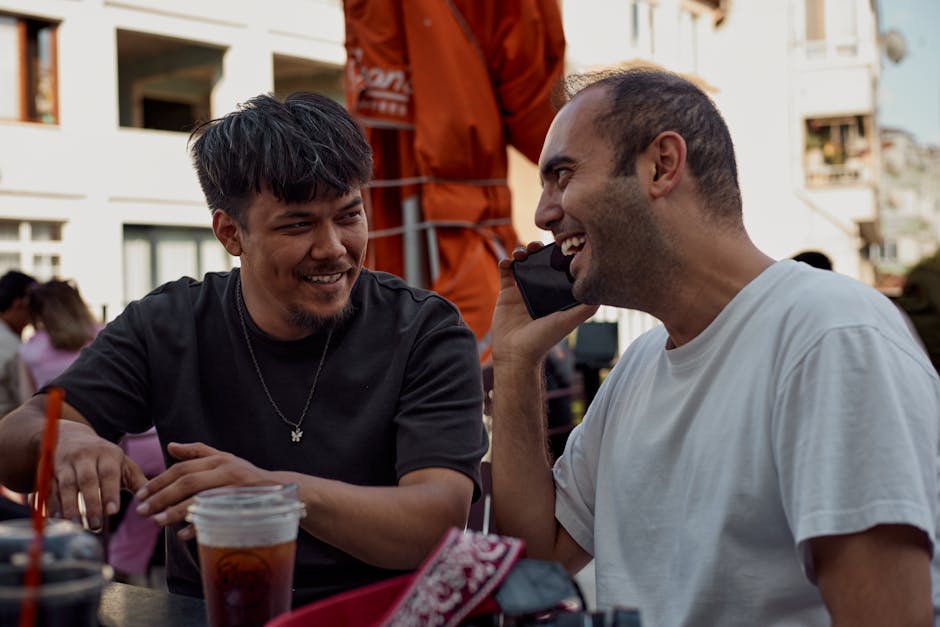
Good table conversation is not about being the funniest person in the room. It is about making it easy for people to answer, add a little personality, and pass the question around without feeling exposed. That is why awkward-free icebreaker questions matter, especially at brunches, coworking meetups, dinner clubs, and small group gatherings where people may have just met.
For expats, remote workers, freelancers, creatives, and digital nomads, adult friendships often start in a slightly unnatural setting: six people at a table, everyone friendly, no one sure where to begin. The right question can turn that first five minutes from stiff to warm. The wrong question can make people feel interviewed, judged, or pushed into oversharing. This guide gives you a practical list of icebreaker questions that help conversation flow naturally offline.
Free to use · No sign-in
A conversation.
A new possibility.
Get to know someone, explore a career move, or talk through a side project. Choose a direction and take six questions into your next conversation.
Save this question for your next coffee together.
Includes a question, an invitation and the tool link. You choose who to share it with.
6 starters, room to go further
Find a connection
Explore the small details of spending time together. For a first meeting, or a conversation you would like to take a little further.
What little preference would you love someone to remember about you?
Follow-up & next step+
Follow up with
How do you usually remember other people's preferences?
Keep it going
Offer a small example of your own, like remembering how someone takes their tea. Leave room for both of you to answer.
If you introduced someone to your favorite hobby, what tiny part would you let them try first?
Follow-up & next step+
Follow up with
What would you want them to notice?
Keep it going
Pick a detail you are curious about. If the interest is mutual, ask: “Is there a good place for a beginner to try it?”
If rain interrupted a day out together, would you find another place to go or leave the day open?
Follow-up & next step+
Follow up with
How would you like to make that decision together?
Keep it going
Share your own rainy-day alternative and find an option you both enjoy. Keep it as an idea for another time.
What would you enjoy being a beginner at with someone: cooking a dish, learning a dance, or something else?
Follow-up & next step+
Follow up with
Would you rather figure it out together or watch someone demonstrate first?
Keep it going
Name one small challenge each. If you find an overlap, ask whether they would like to look for an introductory session together.
At an exhibition or market, what would you enjoy having a companion point out to you?
Follow-up & next step+
Follow up with
Has someone ever helped you notice something you would have missed?
Keep it going
Exchange a detail you each tend to notice, such as food, signs, or sounds. Explore how you might see the same place differently.
If a conversation went well today, would a short coffee or doing an activity together feel more comfortable next time?
Follow-up & next step+
Follow up with
Do you like agreeing on a time first, or talking about what you might do?
Keep it going
If you both want to continue, offer a small, specific invitation: “How would you feel about a half-hour coffee next week?” Give them room to suggest what works.
6 starters, room to go further
Explore a career move
Considering a change, starting again, or curious about another field? Go beyond job titles and leave with something concrete to investigate.
If I had an hour to try your kind of work, which real, small task would you give me?
Follow-up & next step+
Follow up with
At what point might I get a feel for whether I enjoy it?
Keep it going
Turn the task into something you can try independently, such as a one-page summary using public information. Bring that experience to your next conversation.
What skill from another job or part of your life turned out to be useful in this field?
Follow-up & next step+
Follow up with
Can you think of a specific situation where it helped?
Keep it going
Map one experience of your own as “something I have done → a new task it could help with.” Use that map when reviewing role requirements.
What is a regular part of your working week that you did not expect when you entered the field?
Follow-up & next step+
Follow up with
If you had known earlier, how would you have prepared?
Keep it going
Note one detail to investigate. Ask someone else in the field about the same thing to compare how workplaces differ.
How can you tell whether a team mostly works independently or talks things through together?
Follow-up & next step+
Follow up with
What could you ask before joining to understand that rhythm?
Keep it going
Turn the answer into an interview question, such as: “Could you walk me through a typical task from start to handover?”
If I made a small sample project to explore this field, which part would you look at first?
Follow-up & next step+
Follow up with
What would show you that I understood the problem, rather than just the tools?
Keep it going
Choose a public example and make a small sample with your reasoning. Ask someone who is willing to help for feedback on one specific part.
What small thing have you seen a newcomer do that made work easier for the whole team?
Follow-up & next step+
Follow up with
What background did they need to understand first?
Keep it going
Use the example to understand the work. If you later find a relevant opening, check its actual responsibilities and prepare a related example from your experience.
6 starters, room to go further
Talk side projects
Turn “we should do something” into a small, clear idea. Start with observations, skills, and working styles, then decide whether to try a first step together.
What recurring little task has recently made you think, “There must be an easier way”?
Follow-up & next step+
Follow up with
How do you handle it now, and which step takes the most time?
Keep it going
Sketch three steps in the current process together. Pick one to simplify and let the actual problem guide what you try.
To find out whether an idea is worth building, who would you show it to and which small part would you show first?
Follow-up & next step+
Follow up with
What would you want them to try, rather than simply say whether they like it?
Keep it going
Choose an observable action, like asking someone to find one piece of information. Watch how they use it before deciding on the next version.
If we each taught the other something for fifteen minutes, what would you teach and what would you want to learn?
Follow-up & next step+
Follow up with
What small result could we finish in those fifteen minutes?
Keep it going
If your interests complement each other, choose a simple result each, like improving a photo or arranging a slide. Then agree on a time that works.
Instead of introducing yourself by job title, what small piece of work would show how you could help?
Follow-up & next step+
Follow up with
What problem did it solve, and which part was yours?
Keep it going
If the interest is mutual, exchange public portfolio links. Each name one part you would like to hear more about, giving the next conversation a clear starting point.
When a project has two promising directions, would you rather try a version first or agree on criteria for choosing?
Follow-up & next step+
Follow up with
What information would make you reconsider your first choice?
Keep it going
Use a simple, non-confidential example and name one criterion each. Understand how you both make decisions before discussing a collaboration.
If we tried collaborating for just one afternoon, what small result would you want us to finish?
Follow-up & next step+
Follow up with
How could we divide it so we each know what to do?
Keep it going
If you both want to try, write three lines: the result, each person's part, and when to stop. Finish that first, then discuss another step.
What Makes an Icebreaker Question Feel Natural, Not Forced?
An awkward icebreaker usually has one of three problems. It is too intense too early, too generic to create momentum, or too performative. Questions like what is your biggest fear or tell us a fun fact about yourself can work with close friends, but at a first brunch they often create pressure. People start scanning their memory for the most interesting answer instead of relaxing into the conversation.
A good icebreaker is easy to answer in under 30 seconds, but interesting enough to invite a follow-up. It gives people multiple ways to respond. It does not require a perfect story, a special achievement, or deep vulnerability. It should work for someone who just moved to London, someone visiting Berlin for a month, someone working remotely from Singapore, and someone who has lived in New York for years but wants new friends outside their usual circle.
Think of it as a door, not a spotlight. A question like what is one cafe, park, bookstore, or neighborhood you keep recommending lately lets people talk about coffee culture, walking routes, design, books, food, or local habits. It feels specific, but not invasive. It also gives the rest of the table something useful: a recommendation they can actually try next weekend.
The best icebreaker questions also match the energy of the table. At a small group brunch, you want questions that include everyone without forcing a group performance. In a one-to-one conversation, you can go more personal and slower. In a mixed group of expats, locals, digital nomads, and creatives, you want prompts that travel well across cultures and do not assume shared holidays, family structures, politics, religion, or relationship status.
The 5 Rules for Asking Icebreaker Questions Without Making It Weird
The question itself is only half the skill. Delivery matters. You can ask a great question in a way that feels like a job interview, or ask a simple question in a way that opens the whole table. Use these five rules to keep offline socializing light, respectful, and human.
1. Ask something you would answer yourself
If you would hate answering the question, do not ask it. This rule prevents most awkward moments. Before you ask, imagine someone immediately saying, you go first. Would you be comfortable answering honestly in front of strangers? If not, choose something lighter.
2. Give people an easy out
Low-pressure phrasing helps. Try: if you had to pick one, what is a city you would revisit for food? Or: this might be too specific, but what is a small purchase under USD 30 that improved your week? Phrases like if you had to pick and this might be too specific make the prompt feel playful instead of demanding.
3. Avoid questions that rank people
Be careful with prompts about success, productivity, income, career status, dating history, or life milestones. They can quickly make people compare themselves. Instead of what do you do for work, try what has been taking most of your attention lately, work or otherwise? Instead of what is your five-year plan, try what kind of routine are you trying to build this season?
4. Use follow-ups, not interrogations
A conversation flows when one answer creates the next question. If someone says they recently discovered a great bakery in Amsterdam, do not jump to the next item on your list. Ask what they ordered, how they found it, or whether it is a laptop-friendly place. Follow-ups tell people you are listening. A checklist tells them you are performing social skills.
5. Let silence breathe for two seconds
People often panic when there is a pause. But a short pause can be useful. It gives someone time to remember a story or join in. If no one answers after a moment, answer your own question first, then invite someone else with a soft handoff: I will start, and anyone can jump in after.
Awkward-Free Icebreaker Questions by Conversation Goal
You do not need a perfect opening line. You need a few reliable question types. The list below is organized by what you want the conversation to do: warm up the table, reveal personality, create shared recommendations, include remote workers, or move from small talk into real connection.
Quick warm-up questions for the first 10 minutes
These are best when people are still looking at menus, waiting for coffee, or settling into a new group. They are light, answerable, and easy to pass around.
- What is your current go-to coffee order?
- What is one thing that made your week slightly better?
- Are you more of a slow brunch person or a quick coffee and walk person?
- What neighborhood have you been enjoying lately?
- What is a small local habit you picked up from living here?
- What is the last thing you saved on your phone because you wanted to try it later?
- What is a song, show, podcast, or YouTube channel you have had on repeat recently?
- If today had a theme, what would it be?
- What is one food you almost always order if it is on the menu?
- What is your most reliable weekend reset?
Why these work: they do not demand a life story. They start with the present moment, which is safer than asking people to summarize themselves. They also create easy bridges into food, routines, cities, hobbies, and lifestyle.
Questions that reveal personality without oversharing
Once the table has warmed up, use prompts that show taste, habits, and preferences. These are especially useful for adult friendships because they help people notice compatibility without turning the conversation into a biography.
- What is a tiny thing you are weirdly particular about?
- What is a skill you respect more now that you have tried it yourself?
- What is your favorite kind of plan: spontaneous, scheduled, or somewhere in between?
- What is a place that feels like your third place outside home and work?
- What is something you liked before it became popular, or discovered embarrassingly late?
- What kind of person do you become when you are traveling?
- What is one object you always bring when you work from a cafe?
- What is a small luxury you think is worth it?
- What is something you used to dislike but now appreciate?
- What type of day makes you feel most like yourself?
These prompts are useful because they let people choose their depth. Someone can answer with a joke, a practical detail, or a thoughtful reflection. The table can stay light, or it can naturally become more meaningful if the group is ready.
Questions for expats, nomads, and people new to a city
For international groups in New York, London, Berlin, Amsterdam, Sydney, Singapore, or Tokyo, location can be a shared topic without turning into the repetitive where are you from loop. These questions help people talk about place, belonging, and discovery in a more interesting way.
- What is one thing about this city that took you longer to understand than expected?
- What is one local recommendation you would give someone arriving next week?
- What is a city you felt surprisingly comfortable in?
- What do you look for first when you arrive in a new place: food, parks, gyms, cafes, events, or transit?
- What is one thing you miss from a previous city that you wish existed here?
- What is a practical app, website, or local habit that made life easier here?
- What is the best walk you have taken recently?
- What makes a place feel like home for you?
- What is one travel lesson you learned the hard way?
- What is a city you would revisit for one specific reason?
These are especially helpful for digital nomad friendships because they acknowledge movement without romanticizing it. Remote workers and nomads often have plenty of contacts but fewer stable local relationships. A question about routines, third places, or what makes a city feel like home can open a more honest conversation about building connection offline.
Questions for creatives, freelancers, and remote workers
Work can be a natural topic, but it can also become status-heavy. Instead of asking people to pitch themselves, ask about process, attention, and daily life. This works well for designers, writers, founders, consultants, marketers, developers, photographers, and anyone with a flexible schedule.
- What kind of work gives you energy, even when it is difficult?
- What is the best place you have worked from outside your home?
- What is one tool, ritual, or playlist that helps you focus?
- What is a project you are excited about, without needing to explain the whole thing?
- How do you know when you need a real break?
- What is one part of your work that people misunderstand?
- What is something you are learning because of work, not necessarily for work?
- What is your ideal balance between deep work and social time?
- What is a boundary you are trying to get better at keeping?
- What is one creative input you have enjoyed lately: a film, exhibition, newsletter, book, playlist, or conversation?
These questions create common ground without asking for a resume. They also help people move beyond networking mode. At The Weekend Club, the goal is not to collect business cards. It is to meet real people in a curated small group and create enough comfort for a second conversation.
Questions for food, culture, and weekend plans
Food and weekend rituals are reliable because everyone at the table has some relationship to them. They work across cultures and cities, whether the group is talking about a Christmas market in Berlin, a Pride weekend in London, a Super Bowl watch party in New York, a beach day in Sydney, or a rainy Sunday cafe in Amsterdam.
- What is the best meal you had recently, home-cooked or outside?
- What is one restaurant, bakery, market, or bar you think is worth the hype?
- What is one place that looks touristy but is actually fun?
- What is your ideal Saturday if you have no obligations?
- What is one cultural event, exhibition, match, concert, or market you want to check out?
- What is a dish you associate with comfort?
- What is your favorite low-effort way to host people?
- What is one thing you would add to this city if you could?
- What is a public space where you actually like spending time?
- What is the best USD 20 to USD 50 experience you have had lately?
The key is to keep cultural references broad and optional. Do not assume everyone celebrates the same holidays or follows the same sports. Instead, ask about experiences: markets, food, music, public spaces, atmosphere, and rituals. That gives everyone a way in.
How to Keep the Conversation Flowing After the First Answer
A strong icebreaker starts the conversation. Good listening keeps it alive. If someone gives a short answer, do not assume they are uninterested. They may be warming up, speaking in a second language, or unsure how much detail the group wants. Use gentle follow-ups that let them expand without pressure.
Try follow-ups like: how did you find that? What made it memorable? Would you recommend it to someone new here? Is that your usual style, or was it a one-off? What would you do differently next time? These questions are simple, but they show attention. They also move the conversation from facts to stories.
You can also use the bridge technique. Listen for one word in their answer that can connect to a new topic. If someone mentions a bookstore, bridge to reading habits, neighborhood walks, design, coffee nearby, or how they discover places. If someone mentions working from home, bridge to routines, focus, background noise, or the best and worst parts of remote work.
Another useful move is the group handoff. After one person answers, invite the table in: does anyone have a totally different version of that? Or: who is the opposite? This keeps one person from carrying the whole conversation and makes small group gatherings feel balanced. It is also less intense than calling on someone directly.
When a topic starts to land, stay with it. Many people leave good conversations too quickly because they think they need to keep things moving. If the group is laughing about bad airport meals, strange apartment layouts, coffee loyalty, or the chaos of finding friends as an adult, let the thread breathe. Natural conversation is often a chain of small, related stories.
Icebreaker Questions to Avoid at a First Table
Some questions are not bad forever. They are just bad too early. At a first brunch or mixed table, avoid prompts that require people to reveal sensitive information, defend their identity, or explain complex personal choices. You can always go deeper later if trust develops naturally.
- Avoid asking about salary, rent, debt, or financial status.
- Avoid asking why someone is single, married, child-free, divorced, or not dating.
- Avoid asking people to explain politics, religion, or national conflicts.
- Avoid asking where someone is really from.
- Avoid trauma-based prompts like what was the hardest year of your life.
- Avoid competitive career questions like what is your biggest achievement.
- Avoid questions that require a person to represent a whole country, culture, or community.
- Avoid forced vulnerability games unless the group clearly opted in.
If you accidentally ask something that lands badly, repair it quickly and lightly. Say: no pressure to answer that, I realize that might be too much for a first brunch. Then offer a softer alternative. Social confidence is not about never making mistakes. It is about noticing the room and adjusting without making the moment bigger than it needs to be.
A Ready-to-Use 60-Minute Brunch Conversation Flow
If you are hosting or joining a small group gathering, you can use this simple structure. It is not a script. It is a rhythm that keeps the table from getting stuck in introductions or drifting into five separate conversations too quickly.
- Minutes 0 to 10: Start with the present. Ask about coffee orders, weekend plans, the menu, the neighborhood, or one small win from the week.
- Minutes 10 to 25: Move into preferences. Ask about favorite third places, ideal Saturdays, recent recommendations, or small luxuries.
- Minutes 25 to 40: Invite stories. Ask about a city that surprised them, a travel lesson, a work ritual, or a recent cultural experience.
- Minutes 40 to 55: Create shared plans and recommendations. Ask what people want to try next: a market, exhibition, park walk, cafe, concert, class, or food spot.
- Minutes 55 to 60: Close with continuity. Ask what everyone is taking away from the conversation or what recommendation they are actually going to use.
This flow works because it builds trust in layers. People begin with easy facts, move into preferences, then stories, then possible future touchpoints. That is how adult friendships often form: not through one dramatic deep talk, but through repeated moments of ease, recognition, and follow-through.
For The Weekend Club, this is the point of curated offline brunch. AI can help match people based on context, interests, and social rhythm, but the real connection happens at the table. A good icebreaker question is not a trick. It is a small design choice that helps strangers become familiar.
FAQ: Icebreaker Questions for Small Group Brunches
What is the safest icebreaker question for a first brunch?
Ask something present, practical, and positive: what is one thing that made your week better? It works because people can answer with something small, like good weather, a new cafe, a finished task, or a great playlist. It does not require vulnerability, and it gives the table several directions to continue.
How do I use icebreaker questions without sounding scripted?
Do not announce the question like an activity unless you are hosting a structured event. Let it come from the moment. For example, while people are ordering, ask what is your go-to brunch order when you cannot decide? After someone mentions remote work, ask where do you actually focus best? The more connected the question is to the current scene, the more natural it feels.
What should I do if someone gives a one-word answer?
Keep it relaxed. You can offer your own answer, ask a softer follow-up, or open it to the group. Try: fair, I feel that. Mine changes every month. Anyone else have a strong answer? Not everyone warms up at the same speed, especially in international groups or first-time offline social settings.
Final Takeaway: Better Questions Create Better Offline Connection
The best icebreaker questions are not clever for the sake of being clever. They are generous. They give people a comfortable way to enter the conversation, show a bit of personality, and discover overlap with others. In a world of endless apps, DMs, and swipe-based socializing, a natural table conversation can feel surprisingly rare.
Use this list as a starting point, then adapt it to the room. Choose lighter prompts early, listen for bridges, avoid sensitive assumptions, and let good topics breathe. Whether you are building digital nomad friendships, looking for adult friendships in a new city, or simply trying to make offline socializing less awkward, the right question can make a weekend brunch feel like the start of a real community.
Take one question into a real conversation
Save the question that sounds most like you and share your own answer at your next meal. The Weekend Club is one way to make room for a six-person table in your weekend.
Start the quiz and registrationSee how a six-person table works