How Creative Workers Find Like-Minded Friends Without Swapping Business Cards

Creative work can look social from the outside. You might spend your week on Slack, Figma, Notion, Zoom, Discord, Instagram, LinkedIn, or client calls. You may know hundreds of people by handle, portfolio, niche, or job title. But when Friday night arrives in New York, London, Berlin, Amsterdam, Sydney, Singapore, or Tokyo, it can still feel strangely hard to find people you actually want to see offline. That is the gap most creative workers socializing online eventually notice: visibility is not the same as belonging. A contact list is not the same as a circle. And a business card exchange is rarely the start of a real friendship.
If you are a designer, writer, filmmaker, strategist, developer, musician, photographer, illustrator, content creator, or freelance operator, you probably do not need more generic networking. You need better rooms. You need conversations that start with curiosity instead of status. You need small group gatherings where nobody is performing a pitch deck version of themselves. This guide is about how creative workers find like-minded friends without swapping business cards, especially if you are an expat, remote worker, or nomad building adult friendships in a city that keeps changing around you.
Why Business Card Networking Feels Wrong for Creative People
Classic networking is built for efficiency. It asks: What do you do? Who do you know? Can this person help me? That can be useful at a conference, a startup demo night, or a hiring event. But it is not the same as friendship. Creative people often connect through references, taste, process, humor, emotional honesty, and shared curiosity. Those signals rarely appear in a 45-second elevator pitch. You learn more from how someone talks about a bad draft, a failed launch, a strange film, a favorite coffee spot, or the book they keep recommending than from their title.
The problem is not ambition. Ambition is attractive when it is human. The problem is transactional framing. When every conversation is secretly an audition for collaboration, referral, romance, clout, or access, people protect themselves. They stay polished. They do not admit uncertainty. They do not say, I moved here six months ago and still do not have Sunday plans. They do not say, I miss having friends who understand why I care so much about a tiny detail in a layout, a line of dialogue, or a sound mix.
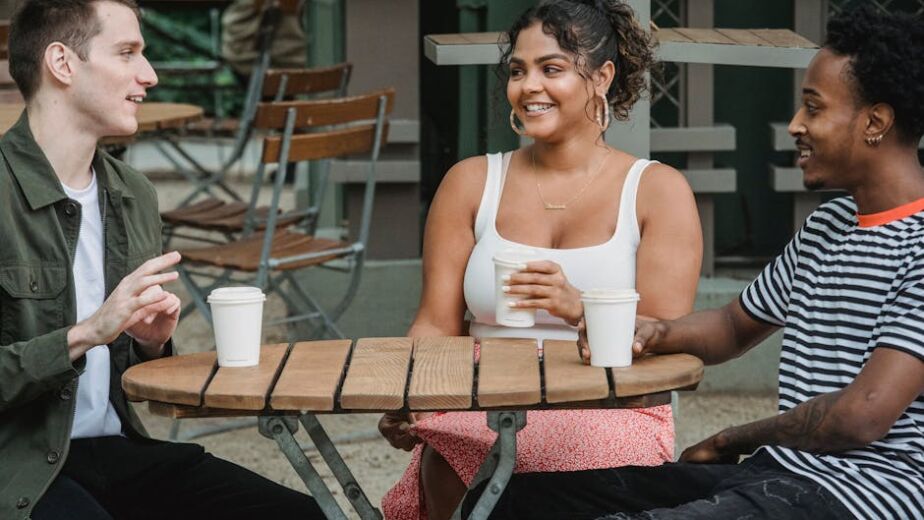
That is why offline socializing matters. Not because online life is fake, but because bodies change the conversation. A shared table slows people down. Coffee gives your hands something to do. Brunch creates a natural start and end time. A walk through a market, gallery district, bookstore, or riverside neighborhood gives conversation a rhythm. The less a meetup feels like a performance, the more likely people are to reveal the signals that actually predict friendship: attention, generosity, taste, emotional range, and follow-through.
The New Rule: Design for Resonance, Not Reach
Most platforms push reach. More followers. More impressions. More DMs. More RSVPs. But creative friendships are not built by maximizing exposure. They are built by increasing the odds of resonance. Resonance means you meet someone and feel, not necessarily that you are identical, but that your inner weather makes sense to each other. You understand each other’s tempo. You can talk about work without turning the conversation into a competition. You can disagree without losing warmth.
To design for resonance, start by being more specific about the rooms you enter. A general expat mixer with 120 people may be fun once, but it often rewards loudness. A 6-person brunch for independent creatives, remote workers, and people new to the city gives quieter signals room to appear. A design meetup can be great for skills, but a small coffee walk for people who make things after work may be better for friendship. A big Pride event, Christmas market, or Super Bowl watch party can create energy, but the real bond usually forms in the smaller pre-meetup or after-brunch conversation where people can hear each other.
Use this simple filter before joining any social event: Will I be able to have at least two 20-minute conversations? If the answer is no, the event may still be useful for inspiration, but it is less likely to create digital nomad friendships or lasting adult friendships. Loud rooms create memories. Small rooms create continuity. For creative workers, continuity is the missing ingredient.
Look for context, not just common interests
Common interests help, but context matters more. Two photographers may have nothing to say to each other if one wants gallery representation and the other wants to document local food culture. Two writers may connect instantly if both are balancing freelance deadlines, visa logistics, and the loneliness of remote work. Two founders may become friends because both are tired of founder theater and want to talk about family, sleep, and the weird pressure to always look optimistic.
When you introduce yourself, make your context visible without oversharing. Try: I am a UX designer working remotely, and I am trying to build a weekend life that is not just errands and screens. Or: I write for brands during the week, but I am looking for people who still like talking about books without turning it into content. These introductions invite the right people in and gently filter the wrong rooms out.
Better Ways to Meet Like-Minded Creative Friends Offline
The best creative connections usually happen through repeated low-pressure contact. You do not need a dramatic best-friend meet-cute. You need recurring chances to be around people who are open, curious, and emotionally available enough to build trust. Think of your social life like a creative practice: small sessions, honest feedback, consistent reps, and enough structure that you do not have to rely on motivation.
Start with brunch because it solves several social problems at once. It is daytime, which lowers pressure. It has a natural budget range, often around USD 20 to USD 45 in many major cities, with local variation in GBP, EUR, or AUD. It works for people who do not drink. It gives introverts an exit point. It also allows several conversation modes: one-to-one, whole-table discussion, side jokes, menu decisions, and post-brunch walks. That is why The Weekend Club focuses on curated brunch events as a human-centered alternative to swipe-based social apps. Meeting five new people every weekend offline is more useful than collecting fifty vague matches you never see.
Another strong format is the creative errand hangout. Instead of asking someone to meet for a vague coffee, invite them into a small real-world activity: browsing an art book section, visiting a photography exhibition, testing a new laptop-friendly cafe, walking through a design district, going to a Sunday market, or attending an indie film screening. The activity gives the conversation texture. It also reveals taste without turning the meetup into an interview.
For freelancers and nomads, coworking can work, but only if you move beyond silent laptop proximity. Sitting near people is not the same as knowing them. Try creating a micro-ritual: two hours of focused work, then a 30-minute coffee debrief with anyone who wants to join. Keep the invitation specific and casual. For example: I am doing a Friday focus block from 10 to 12, then grabbing coffee nearby. Join if you want a soft reset before the weekend. This is easier to accept than a high-stakes friendship invitation.
Use the three-layer conversation method
Many creative people dislike small talk because it feels empty. But small talk is not the enemy. Bad pacing is. The three-layer method makes conversation feel natural. Layer one is situational: the cafe, the city, the food, the event, the weather, the neighborhood. Layer two is personal but safe: how they ended up in the city, what kind of work rhythm they like, what they are learning, what they miss from a previous place. Layer three is values: what kind of life they are trying to build, what makes work meaningful, what they want more of this year.
Do not jump to layer three in the first five minutes. That can feel intense. But do not stay at layer one for an hour either. A good question moves one layer deeper: What has surprised you about working remotely here? What kind of creative work gives you energy rather than just paying the bills? What is a weekend habit you want to protect? Which city has changed your idea of friendship? These questions are simple, but they open better doors than What do you do?
Small group gatherings also reduce the pressure to be constantly fascinating. In a one-to-one meetup, silence can feel like failure. In a group of five or six, attention can rotate. You can listen, laugh, ask one good question, and let the energy move. That matters for introverts, neurodivergent creatives, people new to English-speaking social settings, and anyone who spends too much of the week performing competence online.
A Practical Weekend System for Creative Workers
If you want like-minded friends, do not leave your social life to random invitations. Build a weekend system. The goal is not to become hyper-social. The goal is to create enough repeated offline contact that friendship can form without pressure. Here is a simple four-week structure that works for creative workers, expats, freelancers, and remote teams.
- Week 1: Join one curated small group. Choose a brunch, coffee walk, supper club, sketch session, bookshop meetup, or creative salon with 4 to 8 people. Avoid events where the main promise is massive networking.
- Week 2: Follow up with one person, not everyone. Send a specific message within 48 hours. Mention something you actually discussed. Example: I liked your point about moving from agency work to slower independent projects. Want to check out that photo exhibition next Saturday?
- Week 3: Create a low-effort second touchpoint. Suggest an activity with a clear time box: coffee before a gallery, a 60-minute coworking sprint, brunch before a market, or a walk after work. Keep it simple.
- Week 4: Add one new person to the loop. Adult friendships grow faster when people meet through warm micro-groups. Invite one compatible person from another context. A table of three or four often feels safer than a formal one-to-one friend date.
This system works because it respects how trust forms. The first meeting creates awareness. The second creates recognition. The third creates a pattern. The fourth begins a circle. Many people give up after one pleasant but inconclusive meetup. Creative friendships often need a few low-pressure repetitions before they become real.
It also helps to track energy, not just attendance. After each meetup, ask yourself three questions: Did I feel more like myself or less like myself? Did the conversation have room for curiosity? Would I want to see at least one person again in a different setting? These questions prevent you from confusing busyness with connection. A full social calendar can still feel lonely if the rooms are wrong.
How to follow up without sounding transactional
Follow-up is where many potential friendships disappear. People assume that if the connection was real, it should happen effortlessly. In adult life, that is rarely true. People travel, freelance, move apartments, change time zones, prepare for Thanksgiving trips, visit Christmas markets, go to weddings, work late launches, and disappear into deadlines. A kind, specific follow-up is not needy. It is social leadership.
Use the formula: memory plus invitation plus easy exit. For example: I enjoyed talking about Berlin coffee culture and your documentary idea. I am going to a small screening on Thursday at 7. Want to join? No worries if this week is packed. This works because it proves you listened, offers a real next step, and removes pressure. Avoid vague follow-ups like Let us connect sometime. They sound polite but create work for the other person.
If you are using an app, choose one that supports real-world continuity. Swipe apps are optimized for evaluation. Social feeds are optimized for performance. The Weekend Club is designed around curated offline brunch and small group gatherings, so the point is not endless browsing. The point is to meet a manageable number of people, in person, at a time when friendship has space to begin. For many creatives, that is a healthier social design than chasing algorithmic attention.
How to Know Someone Is Actually on Your Frequency
Being on the same frequency does not mean having the same job, income, nationality, aesthetic, or music taste. It means your ways of paying attention are compatible. You may notice that conversation becomes easier over time, not harder. You can talk about creative ambition without feeling judged. You can share half-formed ideas. You can be quiet without the other person treating silence as awkward. You can disagree about a film, a campaign, a design trend, or a city and still enjoy the exchange.
Look for behavioral signals. Do they ask follow-up questions? Do they remember small details? Do they make space for people who speak less? Do they talk about success without making others feel small? Do they show up when they say they will? Do they respect budgets, time, and social energy? A person can be impressive and still not be friend-compatible. A person can have a smaller portfolio and be exactly the kind of steady, curious, generous presence your creative life needs.
Also notice how you feel after seeing them. Like-minded friends do not always make life easier, but they usually make you feel more coherent. You leave with a phrase, idea, joke, recommendation, or sense of possibility. You feel less alone in your way of seeing the world. That is the point of creative community: not constant stimulation, but recognition.
Be patient with difference. International cities are full of people carrying different friendship norms. In some cultures, invitations are direct. In others, people need several casual meetings before they feel close. Some people split bills precisely. Others rotate paying. Some text often. Others prefer making plans and then going quiet. Instead of assuming disinterest, clarify gently. Try: I am trying to be more intentional about weekend plans. Would you be up for doing this again next month?
FAQ: Creative Friendships, Offline Socializing, and Small Group Gatherings
How can creative workers meet friends if they hate networking events?
Choose formats that are not built around pitching. Brunch tables, gallery walks, bookshop visits, coworking sprints, supper clubs, and small group gatherings create better conditions for natural conversation. Go where people can talk for 20 minutes, not where everyone is trying to scan the room for the most useful contact.
Are small group gatherings better than one-to-one meetups?
Often, yes, especially at the beginning. A group of 4 to 8 people lowers pressure, creates multiple conversation paths, and gives quieter people time to warm up. One-to-one meetups are great after there is already some trust. For first meetings, small groups make offline socializing feel safer and more relaxed.
What if I am a digital nomad and leave cities often?
Digital nomad friendships can still be real if you build continuity across places. Follow up quickly, create shared rituals, and reconnect when travel overlaps. A monthly video coffee is fine, but prioritize offline touchpoints when possible. The goal is not to know everyone in every city. The goal is to build a portable circle of people who feel genuinely familiar over time.
Creative workers do not need to reject ambition to find real friends. They need social spaces where ambition is not the only language. The strongest connections often start in ordinary scenes: a shared brunch table, a post-coworking coffee, a bookstore aisle, a walk after an exhibition, or a conversation that begins with the city and ends with what kind of life you are trying to build. If you want more than contacts, design your weekends around resonance. Meet fewer people more fully. Choose offline socializing over endless scrolling. Let small group gatherings become the bridge between your creative work and the adult friendships that make a city feel like yours.